
Independent voters make up the largest bloc in America. So why are they locked out of the elections that matter most?
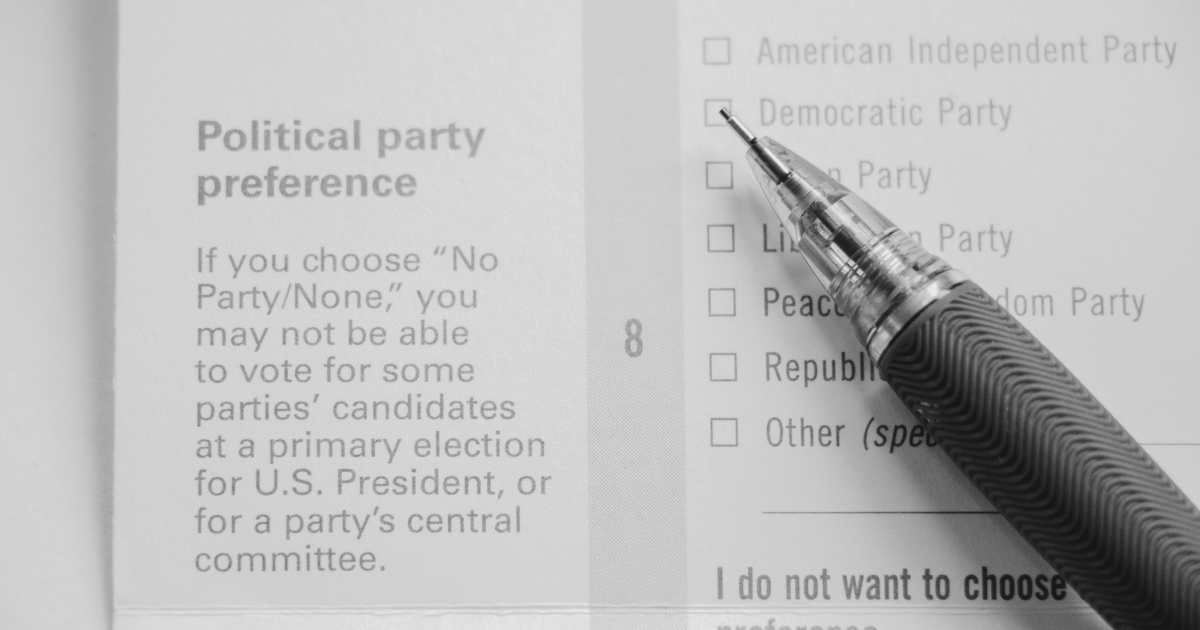
More than 40 percent of American voters now identify as independent. Not Democratic. Not Republican. Independent.
And in most states across the country, those voters are barred from participating in the elections that actually decide who represents them.
We call this the primary problem — and it's one of the most overlooked drivers of political polarization in the United States today.
In most congressional and state legislative districts, one party holds a dominant geographic advantage. A seat is either reliably red or reliably blue. When that's the case, the general election in November is, for all practical purposes, a formality. The real contest happens in the primary — and that primary is often open only to registered party members.
The result? The fate of your representative is decided by the most partisan slice of the electorate. Primary voters skew older, more ideologically motivated, and more loyal to party leadership than the broader public. Candidates learn quickly what that means: don't stray too far from the base, don't compromise, don't reach across the aisle.
Governing gets you primaried. Grandstanding keeps you safe.
There's something fundamentally undemocratic about a system where tens of millions of citizens are excluded from the most consequential elections in their communities simply because they haven't pledged allegiance to a political party.
In closed primary states, independent voters fund the entire electoral process through their tax dollars — but are handed a ballot with no choices on it, or no ballot at all. They watch candidates be selected by a narrow partisan minority and then told that November is when their voice counts.
It doesn't.
When the primary produces a foregone conclusion, the general election is theater.
Political scientists have documented what common sense already tells us: when candidates only have to appeal to their party base to win, they stop trying to appeal to anyone else. The incentives push toward the extremes. Centrisim becomes a liability. Collaboration becomes a weakness.
The politicians who dominate our discourse — the ones who make the most noise, generate the most outrage, and raise the most money from small-dollar donors — are, more often than not, the products of low-turnout, highly partisan primaries.
This isn't a coincidence. It's the system working exactly as it was designed.
Individual voters can't solve this problem by trying harder or being more engaged. The problem isn't apathy — it's architecture.
Reforms like open primaries and nonpartisan primaries give every voter an equal voice in every election, regardless of party registration. They produce candidates who have to build broader coalitions, make real arguments to real voters, and actually compete for the political center that most Americans occupy.
Independent voters aren't asking for special treatment. They're asking for the same access to democracy that party members take for granted.
That's not a partisan request. It's a democratic one.